


OSFP (IHS/Finned Top) to 2x OSFP (RHS/Flat Top)-800G-DAC-2M7FT 800G OSFP 8 x 100G PAM4 IHS/Finned Top to 2 x 400G OSFP 4 x 100G PAM4 RHS/Flat Top Passive Copper Breakout Cable, 2m (7ft)
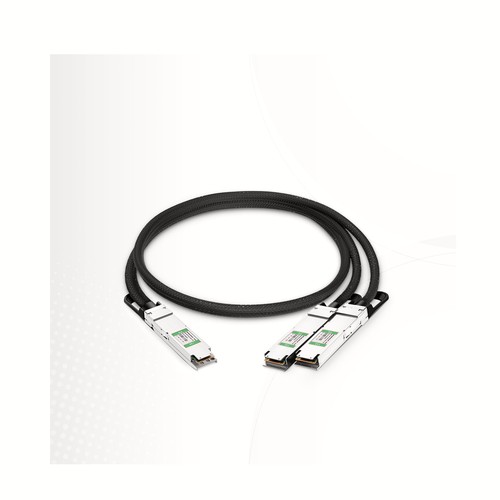
Mixed-vendor installations require an exact compatibility identity at each host. This 2m (7ft) DAC cable is prepared for equipment expecting Generic OSFP (IHS/Finned Top) to 2x OSFP (RHS/Flat Top)-800G-DAC-2M7FT, providing 800G connectivity through OSFP (IHS/Finned Top) to 2x OSFP (RHS/Flat Top). Equivalent-length brand links and separate length pages make it easier to document both ends of the connection correctly.
OEM Part Number: OSFP (IHS/Finned Top) to 2x OSFP (RHS/Flat Top)-800G-DAC-2M7FTHT Part Number: OSFP (IHS/Finned Top) to 2x OSFP (RHS/Flat Top)-800G-DAC-2M7FT
Product Highlights
- HT-manufactured DAC assembly in 2m (7ft)
- 800G connectivity at 800Gbps
- Interface configuration: OSFP (IHS/Finned Top) to 2x OSFP (RHS/Flat Top)
- Fixed length and part number: 2m (7ft), OSFP (IHS/Finned Top) to 2x OSFP (RHS/Flat Top)-800G-DAC-2M7FT
- Cable construction: Passive Breakout DAC
- Conductor specification: 26AWG
- Maximum power consumption: 0.1W (800G End)0.1W (400G Per End)
- Minimum bend radius: 72mm
Specifications
| HT Part Number | OSFP (IHS/Finned Top) to 2x OSFP (RHS/Flat Top)-800G-DAC-2M7FT |
|---|---|
| Manufacturer | HT |
| Form Factor | OSFP (IHS/Finned Top) to 2x OSFP (RHS/Flat Top) |
| Max. Data Rate | 800Gbps |
| Media | Copper |
| Cable Type | Passive Breakout DAC |
| Cable Length | 2m (7ft) |
| Jacket Material | PET |
| Minimum Bend Radius | 72mm |
| Wire AWG | 26AWG |
| Max. Power Consumption | 0.1W (800G End)0.1W (400G Per End) |
| Modulation Format | 8x 100G-PAM4 to Dual 4x 100G-PAM4 |
| Commercial Temperature Range | 0 to 70°C (32 to 158°F) |
| Application | 800G/400G Ethernet |
| Protocols | OSFP MSA Rev5.0, IEEE 802.3ck, CMIS 4.0 |
Signal and Lane Configuration
The listed modulation format is 8x 100G-PAM4 to Dual 4x 100G-PAM4. Both host interfaces must be configured for the same aggregate rate and lane arrangement. A connector that fits mechanically does not by itself guarantee that the remote port supports this encoding or breakout mode.
Passive Copper Operation
A passive DAC has no separate optical conversion stage. Its low-power, low-latency operation is useful for short equipment links, but the assembly must remain within the length and signaling mode accepted by both hosts.
Length Selection and Installation Planning
OSFP (IHS/Finned Top) to 2x OSFP (RHS/Flat Top)-800G-DAC-2M7FT provides 2m (7ft) for connections between separated rack units or nearby equipment positions. Plan the route around cable managers and power cords, keeping the assembly free from connector strain while avoiding a large obstruction in the airflow path.
Position Within the Length Range
OSFP (IHS/Finned Top) to 2x OSFP (RHS/Flat Top)-800G-DAC-2M7FT occupies the middle of this family between OSFP (IHS/Finned Top) to 2x OSFP (RHS/Flat Top)-800G-DAC-1.5M5FT at 1.5m (5ft) and OSFP (IHS/Finned Top) to 2x OSFP (RHS/Flat Top)-800G-DAC-3M10FT at 3m (10ft). It adds 0.5m over the shorter option for extra routing clearance, while the next longer version adds another 1m. Measure the managed path and choose this version when its reach is sufficient without creating the slack associated with the longer assembly.
Mixed-Vendor Network Operation
A mixed-vendor link should be documented at both ends, not treated as one generic connection. Confirm which OEM identity each host expects and whether the two ends use the same compatibility requirement. The related brand links below help locate equivalent-length assemblies, while the physical form factor and lane arrangement must still agree across the complete path. For this assembly, the listed conductor specification is 26AWG; the minimum bend radius is 72mm; the stated power consumption is 0.1W (800G End)0.1W (400G Per End); the jacket material is PET.
Power and Thermal Planning
The rated power consumption is 0.1W (800G End)0.1W (400G Per End). Include this load in the host-port power and thermal budget, especially in densely populated switches. Maintain front-panel clearance and do not bundle the cable so tightly that it obstructs airflow around the connectors.
Cable Construction and Routing
This assembly uses 26AWG conductors, PET jacket, minimum bend radius 72mm. These mechanical characteristics affect how the cable should be dressed behind the equipment. Avoid sharp edges, excessive ties and repeated tight bends close to the connector boots.
Network and Protocol Considerations
The intended application is 800G/400G Ethernet. Listed interface and protocol references include OSFP MSA Rev5.0, IEEE 802.3ck, CMIS 4.0. Confirm that the host firmware and port configuration support the same operating mode.
Breakout Port Mapping
The OSFP (IHS/Finned Top) to 2x OSFP (RHS/Flat Top) configuration divides the high-speed interface into multiple lower-speed connections. Verify the upstream lane assignment, downstream port speeds and breakout setting on the host before connecting the assembly. Each branch must attach to the correct remote interface.
Generic Compatibility and Factory Testing
Testing addresses the brand-specific identification as well as the operating link and available diagnostics. The same physical cable family can require a different host identity for another equipment vendor, so the intended platform should be supplied when a deployment combines multiple brands or unusual hardware revisions. The check includes link stability and diagnostic indications, followed by a final inspection of both ends.
Ordering Information
For mixed-vendor projects, identify the equipment at both ends along with the OEM reference, length and quantity. Order each compatibility version under its own part number. If spare assemblies are required, list them separately so labels and test records remain unambiguous. Quantity and any labeling instructions should be attached specifically to OSFP (IHS/Finned Top) to 2x OSFP (RHS/Flat Top)-800G-DAC-2M7FT.
Quality Assurance and Packaging
Both ends are inspected and the complete assembly is powered up for a functional check before packing. Connectors are protected individually and the cable is secured without tight bends. Optional labels can distinguish host brand, OEM reference and length for easier spares management. Volume orders can include customer references on the labels and carton list.
Frequently Asked Questions
Is this an original equipment manufacturer cable?
No. It is manufactured by HT under our own manufacturer identity.
How should an unused assembly be stored?
Protect both connector ends, keep the cable in a loose bend-safe coil and retain its part-number label so the length and compatibility identity remain traceable.
Can different brands be connected with the same assembly?
Only where both hosts explicitly support the complete interface and compatibility arrangement. Document each end and select the appropriate brand-specific product when required.
Does this order code cover multiple lengths?
No. OSFP (IHS/Finned Top) to 2x OSFP (RHS/Flat Top)-800G-DAC-2M7FT refers here to 2m (7ft). Every other verified length has a separate part number and page in the length list.
Shipping and Lead Time
Available stock is generally dispatched within one to three working days after order confirmation, with production lead times advised for larger quantities. Delivery can be arranged by courier, air freight or sea freight, and goods may instead be handed to an appointed forwarder or shipped on the customer’s courier account.
Transceivers
Malaysia Fiber Optic Supplier
Malaysia Fiber OpticsFactory Address: Block 5, Wangtang Industrial Park,Nanshan Area, Shenzhen,China
Malaysia Office: 68000 Ampang,
Selangor, MYhttps://www.fiberoptic.com.my